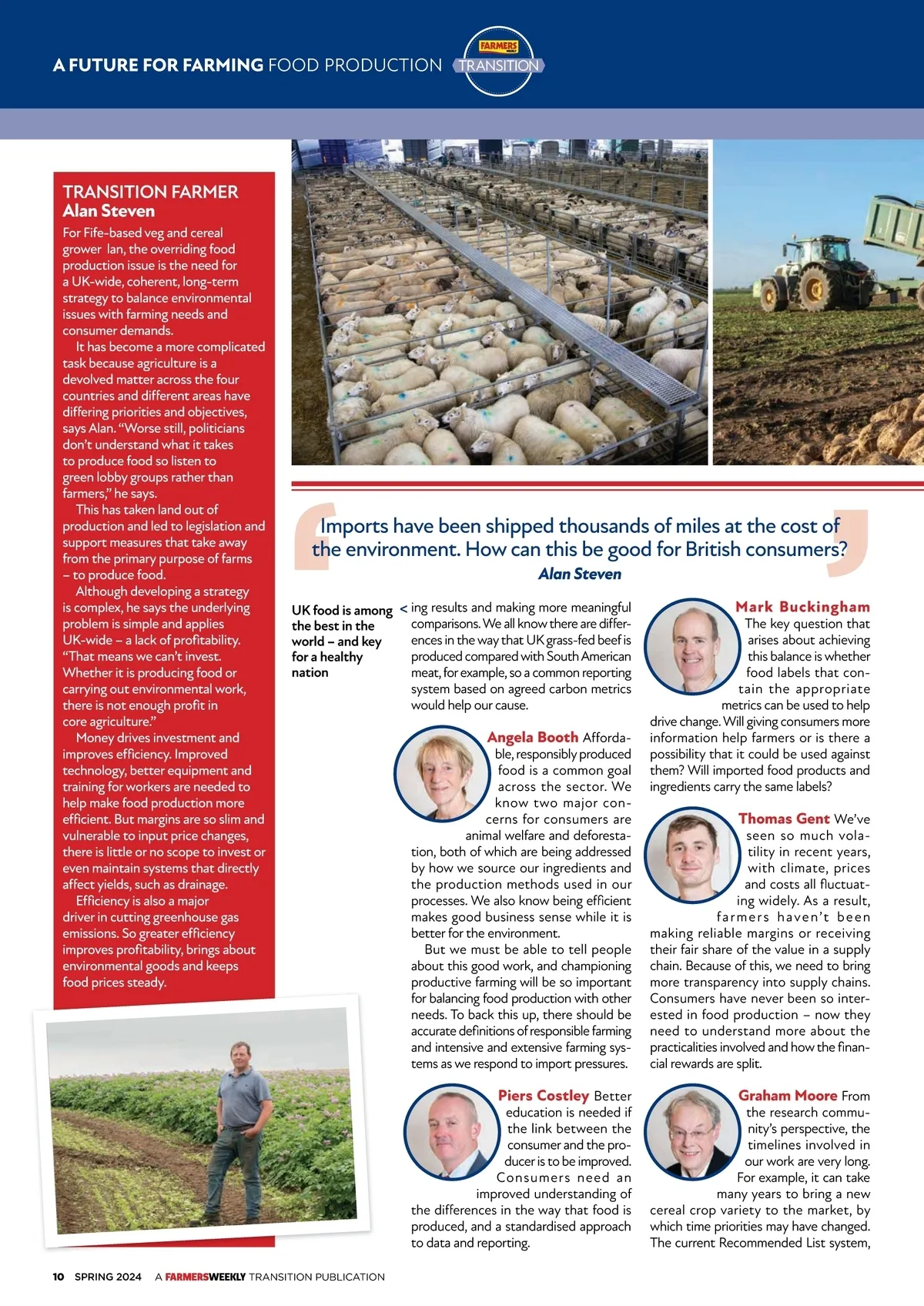
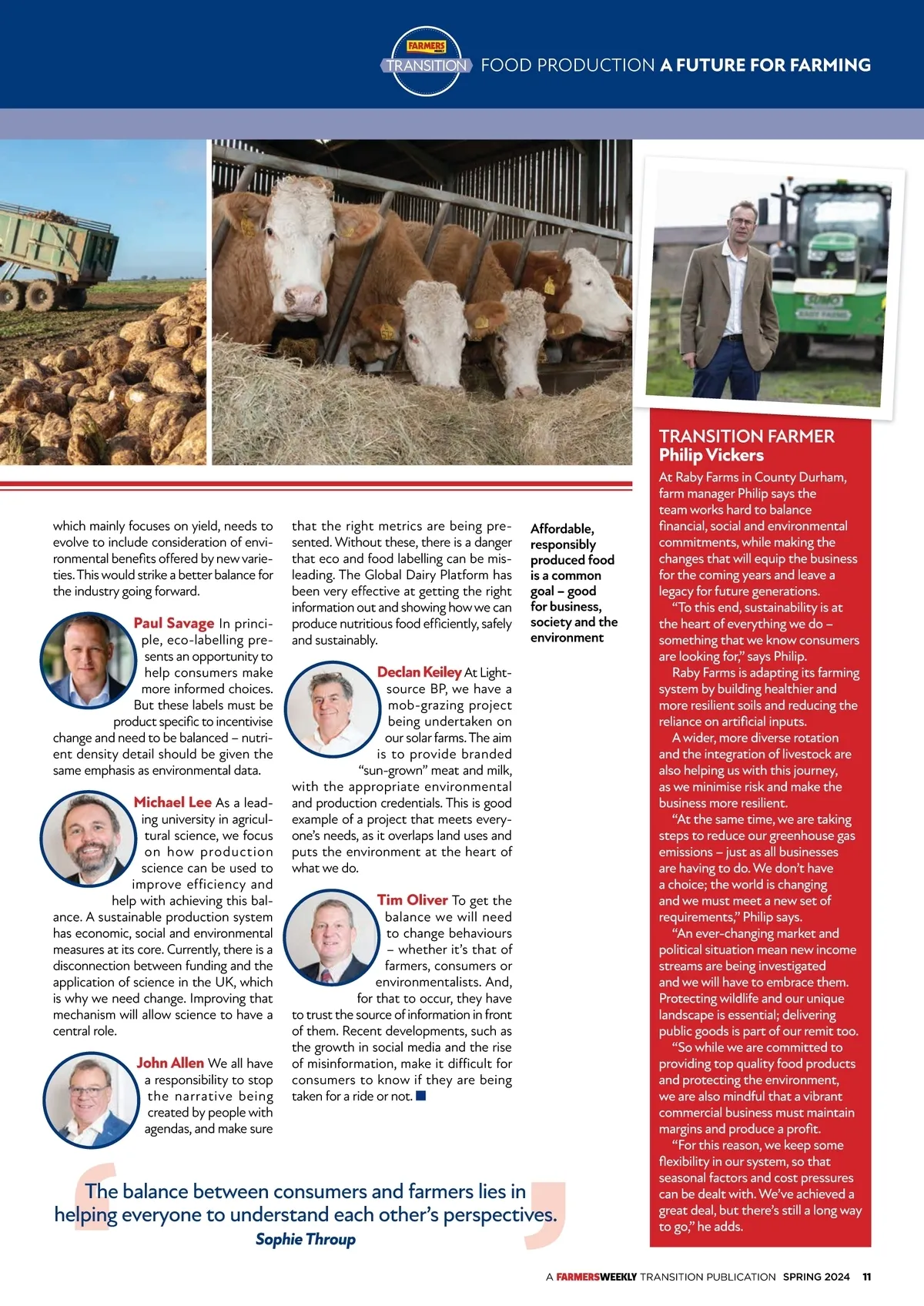
A FUTURE FOR FARMING FOOD NATURAL PRODUCTION CAPITAL TRANSITION FARMER Alan Steven For Fife-based veg and cereal grower lan, the overriding food production issue is the need for a UK-wide, coherent, long-term strategy to balance environmental issues with farming needs and consumer demands. It has become a more complicated task because agriculture is a devolved matter across the four countries and di erent areas have di ering priorities and objectives, says Alan. “Worse still, politicians don’t understand what it takes to produce food so listen to green lobby groups rather than farmers,” he says. This has taken land out of production and led to legislation and support measures that take away from the primary purpose of farms – to produce food. Although developing a strategy is complex, he says the underlying problem is simple and applies UK-wide – a lack of profitability. “That means we can’t invest. Whether it is producing food or carrying out environmental work, there is not enough profit in core agriculture.” Money drives investment and improves eciency. Improved technology, better equipment and training for workers are needed to help make food production more ecient. But margins are so slim and vulnerable to input price changes, there is little or no scope to invest or even maintain systems that directly a ect yields, such as drainage. Eciency is also a major driver in cutting greenhouse gas emissions. So greater eciency improves profitability, brings about environmental goods and keeps food prices steady. ‘ Imports have been shipped thousands of miles at the cost of the environment. How can this be good for British consumers? Alan Steven UK food is among > ing results and making more meaningful comparisons. We all know there are di er-the best in the ences in the way that UK grass-fed beef is world – and key produced compared with South American for a healthy nation meat, for example, so a common reporting system based on agreed carbon metrics would help our cause. ble, responsibly produced food is a common goal across the sector. We know two major con-cerns for consumers are animal welfare and deforesta-tion, both of which are being addressed by how we source our ingredients and the production methods used in our processes. We also know being e cient makes good business sense while it is better for the environment. But we must be able to tell people about this good work, and championing productive farming will be so important for balancing food production with other needs. To back this up, there should be accurate definitions of responsible farming and intensive and extensive farming sys-tems as we respond to import pressures. education is needed if the link between the consumer and the pro-ducer is to be improved. Consumers need an improved understanding of the di erences in the way that food is produced, and a standardised approach to data and reporting. Angela Booth Afforda-The key question that arises about achieving this balance is whether food labels that con-tain the appropriate metrics can be used to help drive change. Will giving consumers more information help farmers or is there a possibility that it could be used against them? Will imported food products and ingredients carry the same labels? Mark Buckingham seen so much vola-tility in recent years, with climate, prices and costs all fluctuat-ing widely. As a result, farmers haven’t been making reliable margins or receiving their fair share of the value in a supply chain. Because of this, we need to bring more transparency into supply chains. Consumers have never been so inter-ested in food production – now they need to understand more about the practicalities involved and how the finan-cial rewards are split. the research commu-nity’s perspective, the timelines involved in our work are very long. For example, it can take many years to bring a new cereal crop variety to the market, by which time priorities may have changed. The current Recommended List system, Thomas Gent We’ve Piers Costley Better Graham Moore From 10 SPRING 2024 A FARMERS WEEKLY TRANSITION PUBLICATION ‘
A Future For Farming Spring 2024: Page 10